Screen 1 of 12
Welcome back
Screen 1
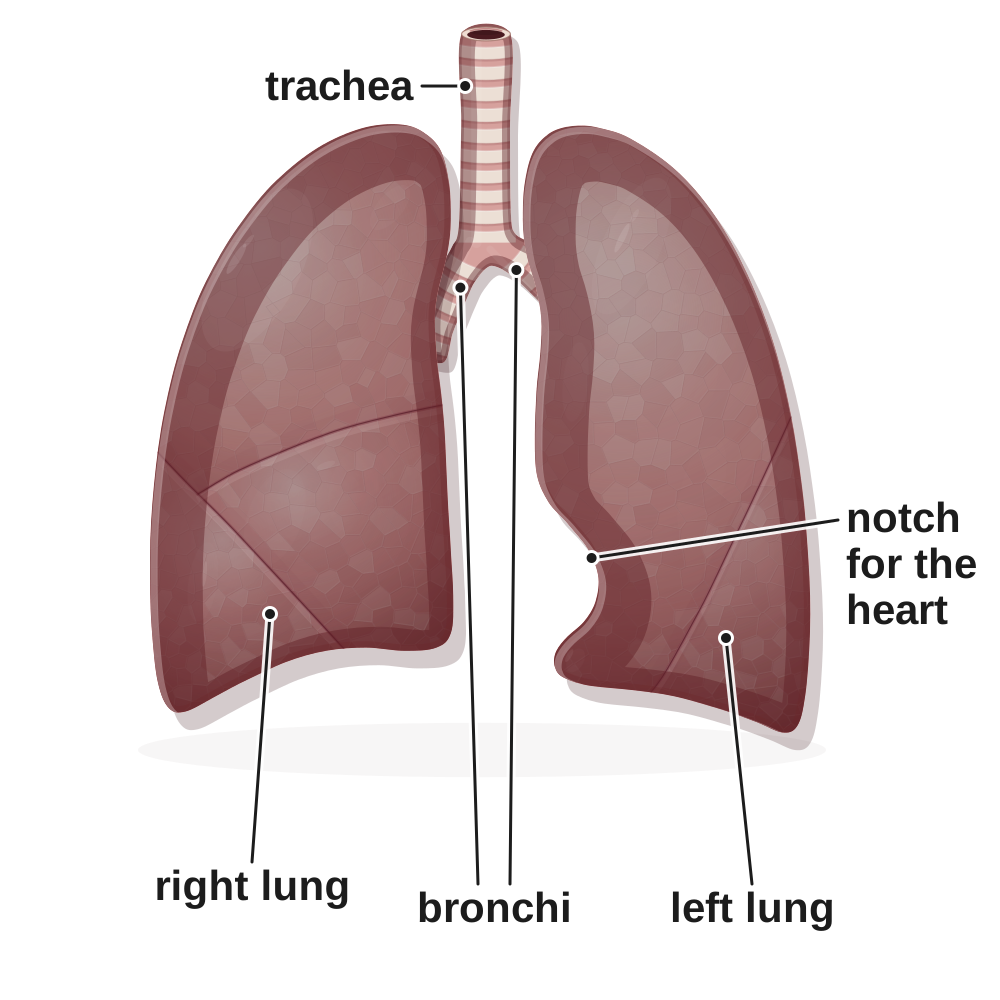
The lungs: where air meets blood
- The lungs are two organs in your chest. They are where gas exchange happens.
- Oxygen moves from the air into your blood. Carbon dioxide moves from your blood into the air.
- Lungs are not muscles. They are soft and spongy, full of tiny air spaces.
Screen 2
Real lungs and a diagram
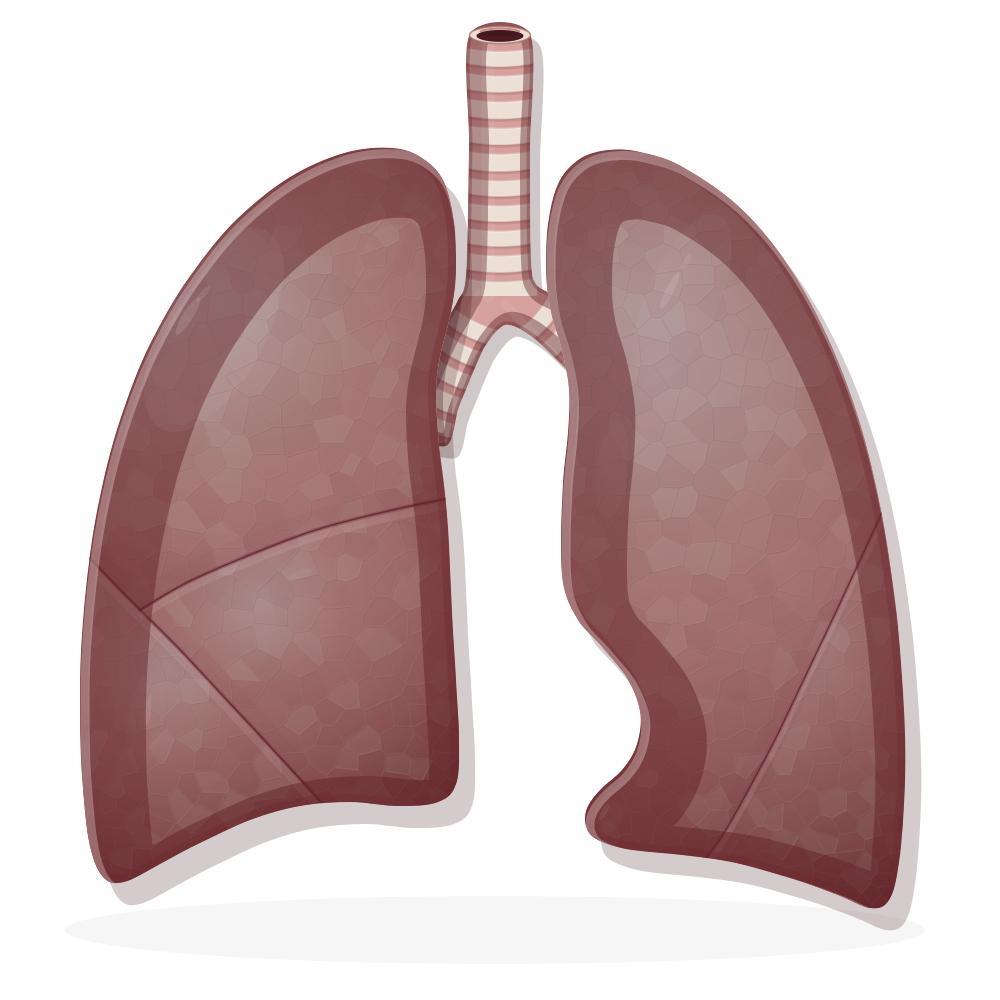
- Real lungs are pink and spongy, and the person's left lung is smaller.
- A diagram is simplified on purpose: it is cut open to show the tubes, and it draws a few alveoli much bigger.
- Real lungs are pink; red and blue show oxygen.
Tap a difference to see it on both pictures.
Real lungs
right lung ← | → left lung
A diagram
right lung ← | → left lung
Real lungs are pink; red and blue show oxygen.
Screen 3
The airways: trachea to alveoli
- The trachea splits into two bronchi, one into each lung.
- The bronchi branch into smaller tubes that end in tiny air sacs: the alveoli.
- A network of capillaries wraps round every alveolus.
Tap a part to see what it does.
Screen 4
Follow the air in
- Air goes in through your nose or mouth and down the trachea.
- It passes into the bronchi, then smaller and smaller tubes, and ends in the alveoli.
Screen 5
Checkpoint 1 of 3
Quick check on screens 1 to 4. Tap an answer.
1.Why is the person's left lung smaller than their right lung?
2.Which is the correct order for air going into the lungs?
3.Which part of the lungs is wrapped in a network of capillaries?
Screen 6
Gas exchange in an alveolus
- Oxygen diffuses from the air in the alveolus into the blood.
- Carbon dioxide diffuses from the blood into the alveolus, and is breathed out.
- Each gas moves from a higher to a lower concentration.
Each gas diffuses from a higher to a lower concentration.
Oxygen into the blood: 0 · back out: 0
Carbon dioxide into the alveolus: 0 · back into the blood: 0
Particles move both ways at random. More move from the higher concentration, so the net movement is to the lower concentration.
Screen 7
Air in and air out
- Air you breathe out has less oxygen and more carbon dioxide than air you breathe in.
- It still has about 16 % oxygen: only some of the oxygen diffuses into the blood.
- The amount of nitrogen does not change. Your body does not use it.
| Gas | Air breathed in (%) | Air breathed out (%) |
|---|---|---|
| nitrogen | 78 | 78 |
| oxygen | 21 | 16 |
| carbon dioxide | 0.04 | 4 |
| water vapour | a little | more |
The rest is mostly argon. Air breathed out is also warmer.
Tap a gas to compare the air breathed in and out.
For example: 500 cm³ of air breathed in holds 21 ÷ 100 × 500 = 105 cm³ of oxygen.
Screen 8
Checkpoint 2 of 3
Quick check on screens 6 and 7. Tap an answer.
1.In the alveoli, which way does oxygen diffuse?
2.Why does carbon dioxide diffuse from the blood into the alveoli?
3.About how much oxygen is in the air you breathe out?
Screen 9
Built for gas exchange
- A large surface area: hundreds of millions of tiny alveoli.
- Thin walls: the alveolus wall and the capillary wall are each one cell thick, so gases diffuse only a short distance.
- A good blood supply and ventilation keep the concentration gradients steep.
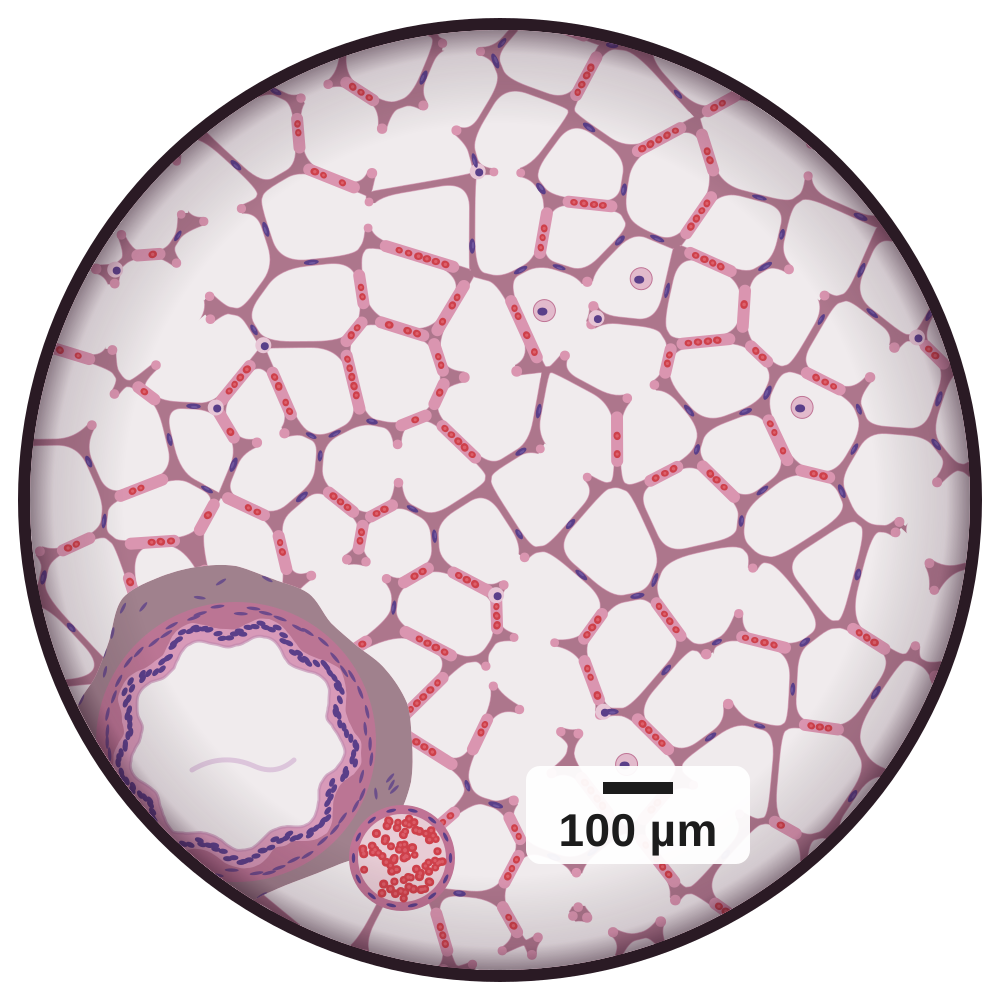
A painting based on a light micrograph. Stains colour the cells. Each pale space is an alveolus.
Screen 10
Breathing is not respiration
- Breathing (ventilation) moves air into and out of the lungs.
- Gas exchange happens in the alveoli, by diffusion.
- Respiration is a chemical reaction in every living cell. It releases energy.
- Breathing: lungs and airways
- Gas exchange: alveoli
- Respiration: every living cell
Screen 11
Apply it: damaged alveoli
- In emphysema, a lung disease, the thin walls between alveoli break down.
- Fewer, bigger air sacs have less surface area, so less oxygen diffuses into the blood.
- The person gets tired and out of breath easily.
The model: 16 small sacs × 4 sides of 1 unit = 64 units. 4 big sacs × 4 sides of 2 units = 32 units.
Doctors can help with medicines and extra oxygen. Smoking increases the risk of lung disease (B2 L11 Health, risk factors and cancer).
Screen 12
Checkpoint 3 of 3
Quick check on screens 9 to 11. Tap an answer.
1.Which feature gives the lungs a large surface area?
2.What is the difference between breathing and respiration?
3.In a lung disease, the walls between alveoli break down. Why is the person often out of breath?
Quiz
Quiz: B2 L9 Lungs and gas exchange
10 questions. Tap an answer. Your first answer counts towards your score.
Which of these is true of real lungs, but NOT of a diagram of the lungs?
Which tube carries air from the throat down to the bronchi?
What are alveoli?
Blood arrives at the alveoli from the heart. What is this blood like?
A person breathes in 300 cm³ of air. About 21 % of it is oxygen. What volume of oxygen is that?
Which gas makes up about 4 % of the air you breathe out, but only about 0.04 % of the air you breathe in?
The alveolus wall and the capillary wall are each one cell thick. How does this help gas exchange?
How does ventilation help gas exchange in the alveoli?
Where does respiration happen?
In a model, 16 small air sacs have 64 units of wall. In the same space, 4 bigger sacs have 32 units. What happens to the surface for gas exchange?
Exam questions
The same five questions as the B2 L9 Exam questions worksheet. 20 marks.
Write your answer, then open the mark scheme and tick each point you made.
01Figure 1 shows the lungs and the tubes that carry air into them.
01.1Complete Figure 1.
Choose answers from the box.
01.2Which statement about the alveoli is correct?
Tick (✓) one box.
Mark scheme
- (1)
- (1)
- (1)
- (1)
01.1: 1 mark for each correct label. allow alveolus for line 3. do not accept capillary for line 3. If more than one word from the box is written on one line, do not give that mark.
Model answer01.1 trachea; bronchus; alveoli. 01.2 They are wrapped in capillaries.
02Table 1 shows the percentages of three gases in air breathed in and air breathed out.
| Gas | Percentage in air breathed in | Percentage in air breathed out |
|---|---|---|
| nitrogen | 78 | 78 |
| oxygen | 21 | 16 |
| carbon dioxide | 0.04 | 4 |
02.1Describe how the percentage of oxygen in air breathed out is different from the percentage in air breathed in.
Use data from Table 1.
02.2A person breathes in 6000 cm³ of air in one minute.
Calculate the volume of oxygen in this air.
Use Table 1.
02.3Explain why the percentage of carbon dioxide is higher in air breathed out than in air breathed in.
Mark scheme
- (1)
- (1)
- (1)
- (1)
- (1)
02.1: allow "it falls by 5 %" / "it goes down from 21 to 16". The answer must use data from Table 1: "it goes down" alone = 0. do not accept "there is no oxygen in air breathed out".
02.2: allow 0.21 × 6000 for the first mark. Correct answer with no working = 2 marks.
02.3: allow "carbon dioxide is a waste product of respiration" for the first mark. allow "moves" for "diffuses". do not accept "the lungs make carbon dioxide" or "breathing makes carbon dioxide".
Model answer02.1 It is lower: air breathed out has about 16 % oxygen, and air breathed in has about 21 %. 02.2 21 ÷ 100 × 6000 = 1260 cm³. 02.3 Cells in the body make carbon dioxide in respiration. It diffuses from the blood into the air in the alveoli and is breathed out.
03Figure 2 shows an alveolus and a capillary.
03.1Name the blood vessel labelled X.
03.2Blood arriving at the alveolus is low in oxygen.
Explain why oxygen diffuses from the air in the alveolus into this blood.
Mark scheme
- (1)
- (1)
- (1)
03.1: allow capillaries. do not accept artery / vein.
03.2: allow "there is more oxygen in the air in the alveolus than in the blood" for the first mark. do not accept "the lungs pump oxygen into the blood".
Model answer03.1 Capillary. 03.2 The concentration of oxygen is higher in the air in the alveolus than in the blood, so oxygen diffuses from the higher to the lower concentration, into the blood.
04Asthma is a common condition.
During an asthma attack, the bronchi and the smaller tubes in the lungs become narrower.
Suggest why a person having an asthma attack feels out of breath.
Mark scheme
- (1)
- (1)
allow "the concentration gradient is less steep" for the second mark. allow "less carbon dioxide is removed from the blood" for the second mark. ignore "they cannot breathe". do not accept "less energy is made / produced" (that point scores 0, others can still score).
Model answerThe narrower tubes let less air reach the alveoli. So less oxygen diffuses into the blood.
05The lungs are adapted for gas exchange.
Explain how the structure of the lungs is adapted for efficient gas exchange.
Mark scheme
Level of response. Read your answer, choose the level that fits best, then pick your mark.
| Level | Marks | Descriptor |
|---|---|---|
| 3 | 5–6 | A detailed and coherent explanation. At least three features of the lungs are each clearly linked to how they make gas exchange efficient, with logical links, for example: walls one cell thick → short diffusion distance → gases diffuse quickly. |
| 2 | 3–4 | Several relevant features are given, and at least two are linked to their effect on gas exchange. The links may be incomplete or not fully explained. |
| 1 | 1–2 | Simple statements about the structure of the lungs, for example "there are lots of alveoli" or "there are capillaries", with little or no link to gas exchange. |
| 0 | 0 | No relevant content. |
Indicative content
- many (hundreds of millions of) alveoli
- give a large surface area, so more gas can diffuse at the same time
- the alveolus walls are thin / one cell thick
- the capillary walls are thin / one cell thick
- so the diffusion distance is short / gases diffuse quickly
- a network of capillaries surrounds every alveolus / a good blood supply
- the blood carries oxygen away and brings carbon dioxide
- so a steep concentration gradient is kept: oxygen higher in the alveoli than in the blood, carbon dioxide higher in the blood than in the alveoli
- ventilation / breathing brings in fresh air and removes stale air
- so the oxygen concentration stays high and the carbon dioxide concentration stays low in the alveoli
- a moist lining, so gases dissolve before they diffuse
- the trachea and bronchi carry air to the alveoli (the trachea is held open by rings of cartilage)
Credit "walls one cell thick"; do not credit "thin cell walls" as a feature (animal cells have no cell walls).
Your mark:
Model answer (Level 3)The lungs have hundreds of millions of tiny alveoli, which give a very large surface area, so a lot of gas can diffuse at the same time. The walls of the alveoli and the capillaries are each one cell thick, so the diffusion distance is very short and the gases diffuse quickly. Each alveolus is surrounded by a network of capillaries. The blood flowing through them carries oxygen away and brings carbon dioxide, so the concentration gradients stay steep. Ventilation brings fresh air into the alveoli and removes stale air, which keeps the oxygen concentration in the alveoli high and the carbon dioxide concentration low. The alveoli also have a moist lining, so the gases dissolve before they diffuse.
Total: 0 out of 20
Printable copy: the B2 L9 Exam questions worksheet and its mark scheme (PDF) are in .